
Why social proof matters for small business (and how to get more of it)
Imagine you're an early human, wandering around with your group doing whatever early humans did on an average sunny morning. Suddenly, three people start running.
You probably don't stand there and ask for further information like…
“Interesting. I wonder whether they've spotted a predator? Perhaps I should conduct my own assessment of the situation before making a decision.”
No.
You run.
Because if everyone else is running, there's probably a good reason for it.
Thousands of years later, we have Google, Instagram, websites, online booking systems and approximately 47 different ways to research where to have lunch.
But the human bit hasn't changed nearly as much.
When we're unsure what to do, we still look at what other people are doing.
And that's essentially the behavioural science behind social proof (yeah I’m paraphrasing a LOT…shhh).
What is social proof and why are we always talking about it?
Social proof is the tendency to use other people's behaviour and experiences as information when we're making our own decisions.
Psychologist Robert Cialdini identified social proof as one of the key principles of influence. His explanation is remarkably relevant to marketing: when people aren't completely certain what they should do, they look to people around them - particularly people they perceive as being like them - for clues. Research into social influence similarly shows that people use the behaviour and opinions of others to help form judgements, particularly when a situation is uncertain.
In other words, someone else has already gone first. They did it. It worked out. This feels safer:
That's why you check the reviews before booking accommodation.
It's why you ask a friend whether they've used a local tradie.
It's why "Who did your kitchen?" is such a powerful marketing channel.
And it's why a potential client can read an entire website telling them how excellent a business is, then be far more persuaded by three sentences from someone who has actually worked with them.
The communication channels have changed but the behaviour underneath them really hasn't.
Social proof reduces the risk of not choosing you
Every purchase involves some degree of uncertainty. Sometimes it's tiny, like if the $6 coffee is terrible, you move on with your life.
But the uncertainty gets considerably bigger when we're spending $500, $5,000 or $50,000.
Will they do what they say?
Will I get value for my money?
Do they understand businesses like mine?
Will they turn up?
Will this actually work?
Am I going to regret this?
Your marketing can answer those questions. But there's an obvious problem - you're the one selling the thing. Of course you think you're good.
Social proof provides another source of information. Instead of you saying:
“We provide excellent service.”
A customer says:
“They kept us informed the whole way through and actually turned up when they said they would.”
Now I've learned something.
Good social proof doesn't just praise you. It helps the next customer understand what it's actually like to choose you, and research backs up just how heavily we rely on it.
Australian consumer research cited by the ACCC found that 82% of consumers looked at online reviews when shopping online and 80% referred to them while shopping in-store. Importantly, people weren't only looking for glowing recommendations. They were using reviews to reduce risk: 64% used them to help avoid a bad outcome, while 41% used them to help make the right purchasing decision.
That's a useful distinction.
Your customers aren't necessarily looking for proof that you're the greatest business that has ever existed.
They're looking for enough evidence to think “Yep. I feel comfortable choosing them.”
And in regional areas reputation travels fast, so social proof matters more. I actually think it has an extra dimension for regional, rural and small-town businesses - because our markets overlap.
Your customer might also be someone's neighbour, cousin, former colleague, footy coach, supplier, parent from school or person they vaguely recognise from the supermarket.
People ask each other.
"Have you used them?"
"Do you know anyone who's worked with her?"
"Are they good?"
Long before Google reviews existed, regional businesses were being reviewed every day. It just happened over fences, at sporting clubs, in workplaces, in shops and over coffee.
Digital social proof hasn't replaced that, it's just made some of it visible.
A Google review, tagged Instagram Story, Facebook recommendation, testimonial or case study allows a potential customer to see some of the reputation that previously travelled primarily through word of mouth.
And for a regional business trying to attract customers beyond its immediate network, that's particularly valuable.
Someone who doesn't know someone who knows you can still find evidence that other people have trusted you.
Social proof is more than Google reviews
When I talk to small business owners about social proof, reviews are usually the first thing they think about. They are important, but they're only one form of it.
Social proof can include:
Google reviews
Testimonials on your website
Customer stories and case studies
Before-and-after examples
Photos of completed work
Customer-generated photos and videos
Social media comments
Customers tagging your business
Recommendations in local Facebook groups
Awards and industry recognition
Media coverage
Partnerships with recognised organisations
Client or customer logos
Numbers that demonstrate experience, such as years in business or customers served
Referrals and good old-fashioned word of mouth
Even something as simple as "Here's what we've been working on this week" accompanied by photographs of real jobs can be social proof.
You're showing people that other customers are already choosing you.
The best social proof is specific
"Erika was amazing! Highly recommend!"
Lovely.
I'll take it.
But compare it with:
"Working with Erika over the past 12 months has been one of the best things I have done for my business." (Part of an actual Google review)
That's much more useful.
Why?
Because a potential customer can recognise themselves or their need in it.
The strongest social proof often answers one or more of these questions:
Who was the customer?
What were they trying to achieve?
What were they worried about?
What did you actually do?
What changed?
What was the experience like?
That similarity matters.
Cialdini's work on social proof points to our tendency to pay particular attention to the behaviour of people we perceive as similar to ourselves.
So don't assume the biggest company you've worked with automatically provides your best testimonial.
If your ideal customer is a family-owned manufacturing business in regional Victoria, a detailed story from another family-owned regional business may carry far more weight than a famous logo.
Your customer needs to think - “They're like me and this worked for them.”
How to collect more social proof
The simplest answer? Ask. I know. Revolutionary marketing advice…
But many very good businesses have surprisingly few reviews because collecting them isn't built into their customer experience.
Don't leave it to chance. Choose a natural point in your process when the customer is likely to be feeling good about the experience and make asking part of what happens next.
After a project is completed.
After a product arrives.
After you've received a lovely email saying thank you.
After a customer tells you in person how happy they are.
After you've achieved a particular milestone together.
Send them the direct link and make the request easy.
And don't be afraid to give people a little guidance. You're not telling them what to say. You're helping them get past the blank box.
You might ask:
What were you looking for help with? What did you find most useful about working with us? Is there anything you'd tell someone considering working with us?
You'll often get a much more useful review than "Great service, five stars."
One important Australian business note - keep it genuine. The ACCC is very clear that businesses must not create or arrange fake or misleading reviews. If you offer an incentive for reviews, it must apply regardless of whether the review is positive or negative, and the incentive should be disclosed.
Social proof works because people trust it
Don't wreck the thing that makes it valuable. Don't collect your best proof and then hide it - this is another mistake I see.
A business has 74 excellent Google reviews and absolutely none of them appear anywhere else.
Use them.
A customer shouldn't have to leave the page they're considering buying from, open Google, search for your business and conduct a small investigation to discover that everyone loves you.
Put relevant proof near the decision it supports
If you have a service page about your tennis coaching, put a review from someone who you’ve coached on that page.
If you're selling a workshop, include feedback from people who've attended that workshop.
If you're explaining a $5,000 service, use a testimonial from someone who invested in that service and can explain the result.
If you're talking about delivery, show a review that specifically mentions how easy and reliable delivery was.
Don't just create one enormous testimonials page and expect everybody to visit it.
Social proof works particularly well when it appears at the moment someone is wondering:
"But will this actually work for someone like me?"
Answer the question right there.
Your social proof can also tell you what your marketing should say
There's another reason I want you to start paying attention to reviews. Your customers will often describe the value of your business better than you do.
Look through your reviews, testimonials, emails and customer feedback and notice what keeps appearing.
Maybe customers repeatedly mention how quickly you respond.
Maybe they talk about how comfortable you made them feel.
Maybe they're surprised by how straightforward your process was.
Maybe everyone mentions the same staff member.
Maybe the thing you think makes your business special barely gets mentioned — and something you've almost taken for granted appears over and over again.
That's useful information. Your customers are telling you what they value.
Listen to them.
A quick social proof audit for your business
Take ten minutes and look at your business as someone who has never bought from you before.
Search your business name.
Look at your Google Business Profile.
Open your website.
Look at your key service or product pages.
Check your social media.
Then ask:
Can I see evidence that real people choose this business and are happy that they did?
Not claims. Evidence.
If the answer is no - or if all your evidence is three years old - you've found a useful marketing job.
You probably don't need another clever piece of content this week.
You might just need to show your next customer that someone else has already gone first.
Because your customers may have smartphones, Google and considerably better footwear than our early-human ancestors. But when they're standing there wondering whether to run, book, buy or enquire, they're still looking around to see what everyone else is doing.
Make sure there's something worth seeing.
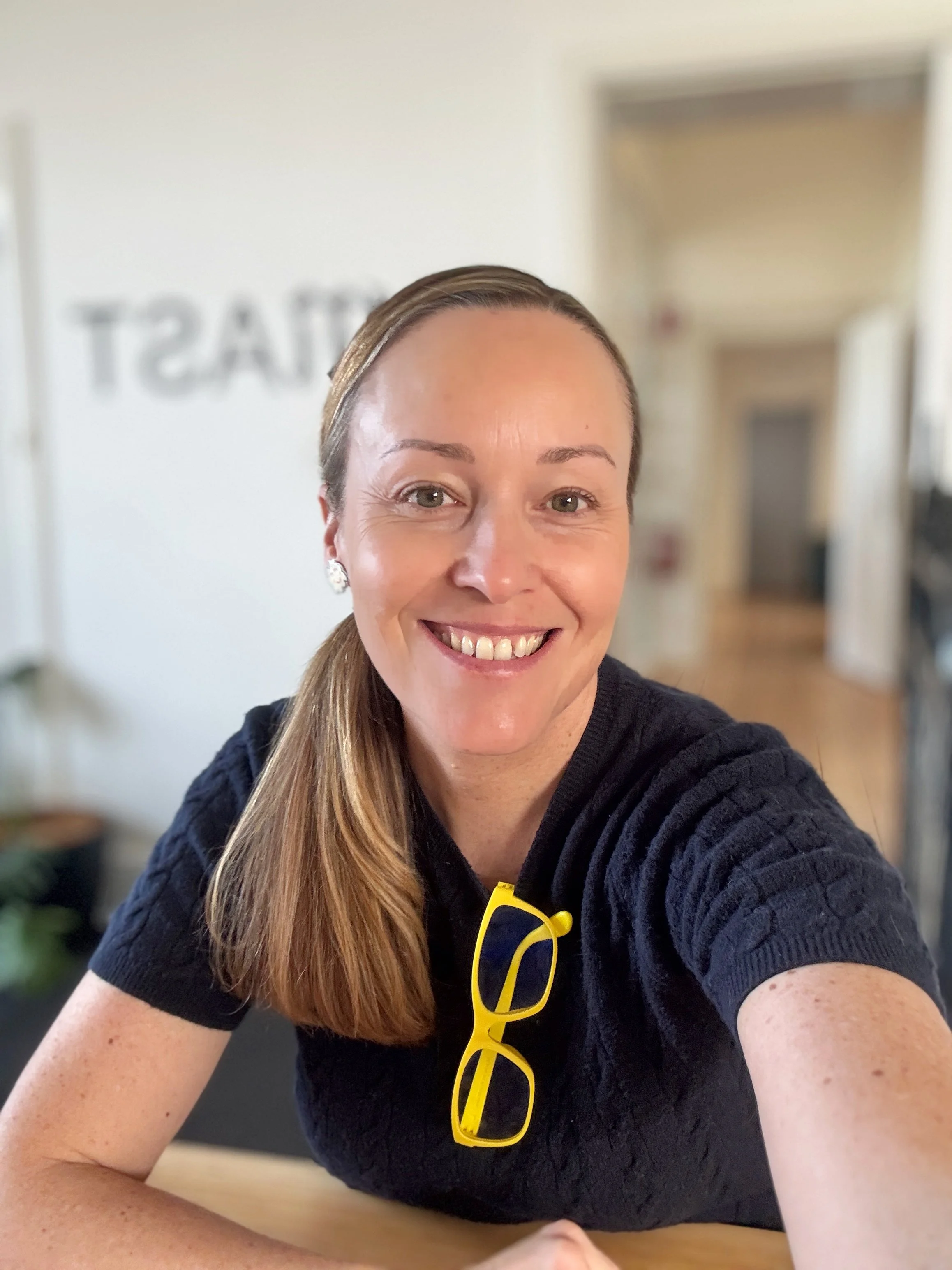
Hi, I’m Erika McInerney - a marketing and customer experience strategist working with regional, suburban and small-town businesses.
I help you see where customers and revenue are leaking, build practical marketing strategies around your real capacity, and create systems that actually support your business (and your life).
Alongside one-on-one work, I partner with councils, business groups and organisations to deliver practical workshops that build marketing capability across entire communities.
If you’re ready for clearer strategy and more confident visibility, you can book a free discovery call, send an email or connect on social media.
References
Robert B. Cialdini & Noah J. Goldstein, Social Influence: Compliance and Conformity, Annual Review of Psychology, 2004.
Association for Psychological Science, Robert B. Cialdini and Jennifer L. Eberhardt on the 7 Principles of Influence.
Australian Competition and Consumer Commission, Online reviews for products and services and Consumer Policy Research Centre research on the impact of online reviews on consumer choice.